Client snapshot
EzyDog UK is the British market storefront for the EzyDog brand, selling premium dog harnesses, leads and outdoor accessories direct-to-consumer via Shopify. The UK pet accessories market is competitive with strong organic search demand and a well-established DTC ecommerce ecosystem. EzyDog UK came to Ignited Nepal by referral, specifically because of results delivered for EzyDog Australia.
The challenge
EzyDog UK was not broken. It was underperforming relative to its potential. The brand was strong, the product quality was real, and the Shopify infrastructure was functional. What was missing was a deliberate CRO strategy on the category and product pages, a structured SEO approach calibrated to the UK market, and a system for growing average order value beyond the initial purchase. The team knew what the Australian numbers looked like. They wanted the same standard applied to the UK market.
The diagnosis
- Category page content was thin and not keyword-targeted for UK-specific search intent. The UK market uses different phrasing for product categories than the Australian market, and those differences were not reflected in the on-page content, meta titles or H1 tags.
- Product pages had no cross-sell or upsell mechanics. Customers purchasing a harness were not being shown compatible leads, training attachments or complementary accessories. Revenue per transaction was constrained by a layout that presented one product in isolation.
- The AOV was lower than it should have been for a brand with this range depth. There was no structured upsell path on high-intent product pages and no cart-level cross-sell prompting customers to complete a logical product bundle.
- Above-the-fold layouts on both category and product pages had not been designed for conversion. Trust signals, social proof and primary CTAs were not in optimal positions relative to where users’ attention lands on entry.
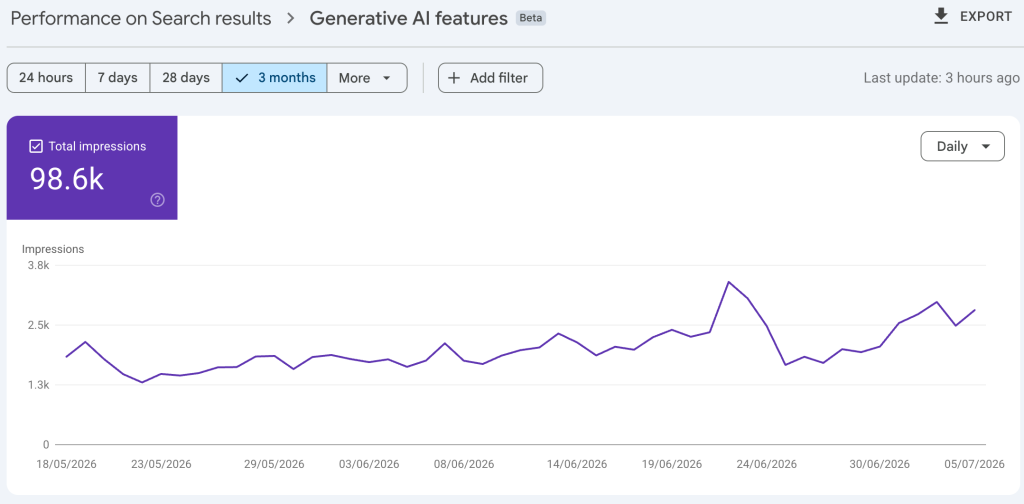
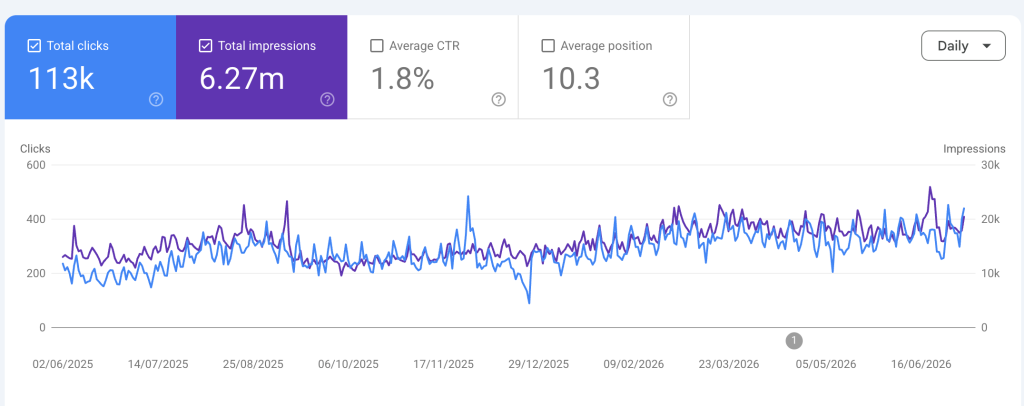
- Organic performance was steady but not compounding. There was no month-on-month growth system in place. Rankings existed but were not being systematically built upon.
- Internal linking was shallow. High-authority pages were not actively directing link equity toward the category and product pages with the most commercial value.
What we built
- Conducted UK-specific keyword research for all major product categories. Identified where UK search phrasing diverged from AU equivalents and updated all targeting accordingly.
- Rewrote category page H1 tags, meta titles, meta descriptions and content blocks to reflect UK-specific keyword intent. Each major category now targets a defined primary keyword cluster.
- Rebuilt the internal linking structure with commercial page priority. High-authority pages and the homepage actively pass equity to the category pages with the highest revenue potential.
- Redesigned collection page and product page templates with CRO principles applied: trust badge positioning, above-the-fold layout restructure, primary CTA hierarchy and image optimisation.
- Implemented cross-sell modules on all major product pages. Cross-sell recommendations were mapped to logical product pairings based on purchase behaviour: harness pages show compatible leads and training attachments, life jacket pages show companion safety gear.
- Built upsell mechanics at the product page and cart level. Customers are presented with higher-tier product variants and bundle options at the point of highest purchase intent.
- Ran ongoing on-page SEO work: monthly content updates, optimisation of underperforming pages, and expansion into adjacent keyword clusters as core category rankings stabilised.
- Set up reporting in GA4 with UK-specific segmentation, tracking organic channel performance, AOV and conversion rate separately from other markets.
The results
| Metric | Before | After | Period |
|---|---|---|---|
| Site conversion rate | — | 6%+ | Post-CRO implementation |
| Industry average (pet ecommerce) | 1.5–2.5% | Benchmark for context | — |
| Organic sessions | Baseline | Month-over-month growth | Ongoing |
| Organic revenue | Baseline | Month-over-month increase | Ongoing |
| Average order value | — | Increased | Post-CRO implementation |
The business impact
A 6% conversion rate in pet ecommerce is not a number that happens by accident. The industry average sits between 1.5% and 2.5%. EzyDog UK running above 6% means the store is converting at two to four times the rate of a typical competitor in the same category. That gap compounds over time: the same traffic budget delivers two to four times the revenue, or the business can grow revenue without proportionally growing ad spend.
The cross-sell and upsell work matters as much as the conversion rate. A customer who buys a harness and a compatible lead in the same transaction has a higher lifetime value and a lower cost to acquire than two customers who each bought one item. Structuring the product page and cart experience to surface those logical pairings is not complicated, but it requires deliberate design decisions and the willingness to test and refine them. The AOV growth at EzyDog UK reflects that work done correctly.
EzyDog UK came by referral because of what was built in Australia. The results justify the referral.