E-commerce Growth Engineering · United States

The e-commerce growth agency US Shopify stores use when SEO, Performance Max, and Klaviyo need to work as one connected system.

Most US stores run SEO with one team, paid with another, and email as an afterthought. Each channel reports its own numbers. None of them are accountable for total revenue. We engineer the full stack — SEO, paid, product feed, checkout, and retention — so each channel amplifies the others and growth compounds.

Shopify · WooCommerce · BigCommerce · US + export markets · Traffic · Conversion · Retention
This is for you if

You have the traffic. The system is leaking.

The store converting under 2% — Traffic is real — from SEO, paid, or social. But fewer than 2 in 100 visitors buy. Your product pages are missing the signals US buyers need before committing: delivery estimates, return policy clarity, review count, trust marks, payment options. Every percentage point of CVR improvement is revenue with zero additional ad spend.

The store where Performance Max is spending without clear return — You're running PMax. Google is spending the budget. You can see revenue attributed to it in Google Ads. But you can't tell whether PMax is driving incremental customers or cannibalising your branded search and organic traffic. The feed might be incomplete. The audience signals might be missing. You don't know.

The store where Klaviyo is installed but not producing — You installed Klaviyo six months ago. You have a basic welcome email. The abandoned cart flow fires but has a 4% recovery rate. There are no post-purchase flows, no browse abandonment, no win-back. Klaviyo is the highest-ROI retention tool available for Shopify — and you're using 5% of it.

The Shopify store at $500k–$5M ready to break through the ceiling — Revenue is real. Paid acquisition is working but becoming more expensive. Organic traffic isn't growing fast enough. Retention is thin. You're not sure whether to invest in SEO, improve conversion rate, or double down on email. This is a systems problem — and the audit tells you where to start.

What's broken

Here's what's costing you sales

Your product pages lose buyers before checkout

US online shoppers abandon product pages without: fast delivery confirmation, clear return policy, social proof (reviews, UGC), payment options (Shop Pay, PayPal, Affirm). These aren't design preferences. They're conversion requirements. Each missing element is a measurable reason to leave.
You have no systematic retention layer

A healthy US e-commerce store drives 35–45% of revenue from repeat buyers. Without all 6 Klaviyo flows — welcome, cart abandon, post-purchase, browse abandon, win-back, VIP — you're acquiring customers at increasing cost and then letting them go. The Klaviyo layer typically adds 25–35% to total store revenue once fully built.

Performance Max has no real foundation

PMax without a complete product feed, strong audience signals from real buyer data, and properly structured creative assets tends to underperform standard Shopping. Google's automation amplifies what's already working — if the feed is incomplete and the audience signals are thin, automation amplifies bad signals. Feed and audience quality come before PMax optimisation.

SEO doesn't reflect how your buyers actually search

Category pages with no content beyond a product grid. Product pages using manufacturer copy across the entire catalogue. No structured data for rich results. No topical authority structure that tells Google what your store is about. This isn't a content volume problem — it's a relevance and authority structure problem.

What we engineer

Full-stack e-commerce growth for US Shopify stores

E-commerce SEO

Category page optimisation with keyword intent mapping. Product page schema markup so Google shows ratings, price, and stock in search results. Technical SEO for large catalogues: canonical tags, pagination, crawl budget. Content for handicraft, pashmina, and tea export keywords — a cluster with virtually no competition.

Google Shopping & PMax

Product feed rebuild: correct categorisation, complete attributes, consistent titles and descriptions. Campaign structure that separates high-margin SKUs from clearance. Shopping SEO — optimising product titles for Google's organic Shopping results. Performance Max management with audience signals and creative testing.

Shopify / WooCommerce CRO

Product page audit identifying every point where buyers hesitate and leave. Checkout flow optimisation: fewer steps, clearer progress, fewer abandonment triggers. Mobile optimisation — most Nepali shoppers are on mobile. A/B test framework so improvements are data-driven, not guesswork.

Meta Ads for e-commerce

Prospecting campaigns targeting buyers in Nepal and export markets. Dynamic product ads that show the exact product a visitor viewed. Retargeting sequences for abandoned carts and product views. Creative strategy: static, carousel, and video formats tested against each other.

Email retention

Welcome series that converts subscribers into first-time buyers. Abandoned cart sequences — typically 15–20% recovery rate. Post-purchase flows that drive the second sale. Win-back campaigns for customers who haven't bought in 90+ days. Browse abandonment for high-intent visitors.

Daraz & local payments

Daraz store setup and optimisation: listings, keyword-rich titles for Daraz search, category selection, seller rating management, Sponsored Products. Plus eSewa and Fonepay integration into Shopify and WooCommerce stores so Nepali mobile buyers complete checkout.

What changes

What your store looks like after the work

Before
After
Before Conversion rate 1.4%
After CVR 2.8–4.5% — more revenue from every traffic source, no extra ad spend
Before Klaviyo: welcome email only
After 6 Klaviyo flows + SMS layer driving 25–35% of revenue
Before Performance Max ROAS 1.9× — feed and signals incomplete
After PMax restructured — ROAS improves 1.8–2.4× without higher budget
Before CAC climbing 15–20% year-on-year
After CAC flat or declining — retention and organic offset paid cost increases
Before No channel visibility
After Full channel P&L — profit per SKU, campaign, and source
How it works

Six steps from audit to compounding growth.

  1. 01

    E-commerce growth audit

    Days 1–5

    We audit your traffic sources, conversion rate by device and page, retention metrics, product feed quality, and paid channel performance. For stores on Daraz, we audit your seller metrics and listing quality in parallel. The output is a ranked list of revenue gaps — what's costing you the most and in what order to fix it.

  2. 02

    Quick wins

    Weeks 2–3

    Fix the highest-impact items first: product feed errors that are suppressing Shopping impressions, checkout friction points, missing payment methods, and email flows that aren't live. Most stores see measurable improvement in conversion rate within the first 3 weeks.

  3. 03

    SEO layer

    Month 1–3

    Category page content written to rank for Nepali and export market search terms. Product schema markup. Technical SEO fixes: canonical tags, page speed, crawl budget. Link building from relevant directories and industry publishers. Daraz listing optimisation in parallel.

  4. 04

    Paid acquisition

    Month 1–2

    Google Shopping campaign restructure or build. Meta prospecting and retargeting campaigns live. Creative testing begins. Performance tracked weekly against CAC and ROAS targets.

  5. 05

    Retention system

    Month 1–2

    Klaviyo or equivalent email platform configured. All 6 core flows built: welcome, abandoned cart, post-purchase, browse abandonment, win-back, and VIP. Revenue per flow tracked from day one.

  6. 06

    Scale and compound

    Month 3+

    CRO testing programme: A/B tests on product pages, checkout, and landing pages. Creative refresh on paid campaigns. New channel expansion: additional markets, new ad formats, new SEO content clusters. Monthly reporting against revenue, CVR, CAC, and retention targets.

Evidence

What the work produces

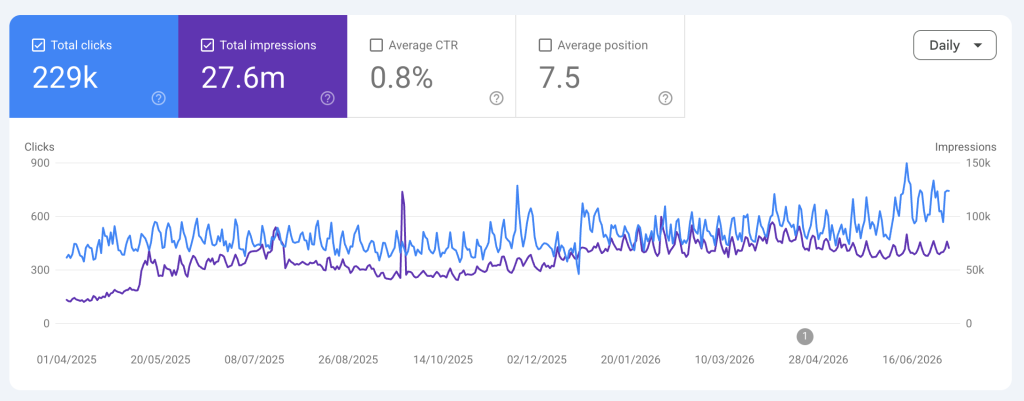
+18% organic sales in the first 30 days
Ecommerce · Pet products Australia

+18% organic sales in the first 30 days

#1 For every major category keyword
+18% Organic sales, month one
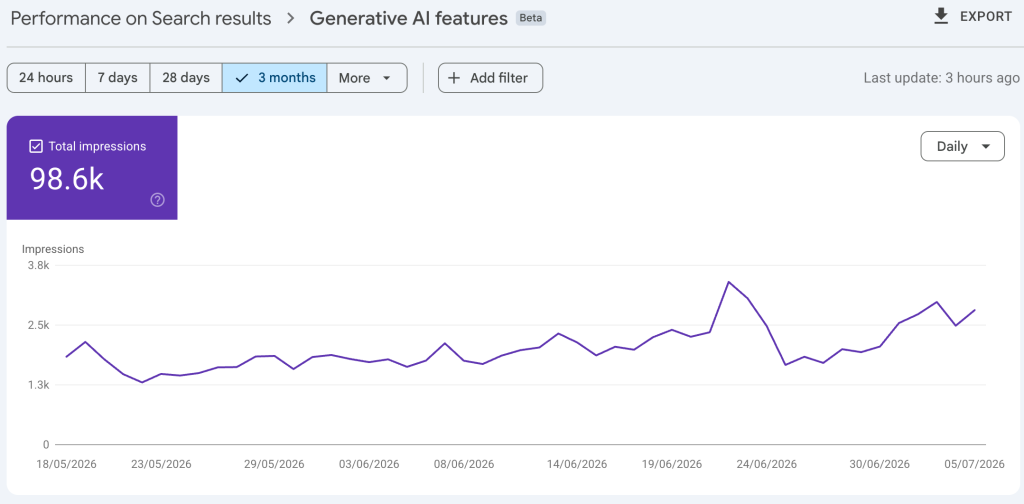
12%+ Conversion rate from AI platforms
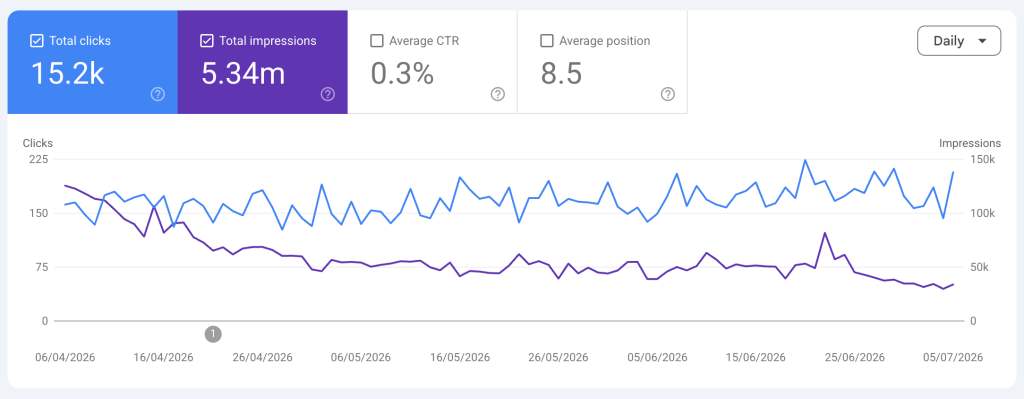
Conversion rate doubled, 1.8% to 3.4%, with zero organic equity lost
Ecommerce · Pet products United States

Conversion rate doubled, 1.8% to 3.4%, with zero organic equity lost

1.8% → 3.4% Site conversion rate
+7–9% Organic revenue, month over month
99.5% GA4 / Shopify data match
6%+ conversion rate — two to four times the pet-ecommerce average
Ecommerce · Pet products United Kingdom

6%+ conversion rate — two to four times the pet-ecommerce average

6%+ Site conversion rate
2–4× Above industry average (1.5–2.5%)
Growing Organic revenue & AOV, month on month
Common questions

Common questions about e-commerce growth in the US

Is Shopify the right platform for US e-commerce?

Shopify is the dominant e-commerce platform in the US for a reason. It's fast to launch, reliable, has a mature app ecosystem, and handles US payment gateways (Shop Pay, Affirm, PayPal) cleanly. WooCommerce is worth considering if you're already on WordPress with significant content infrastructure. BigCommerce suits stores with complex B2B or multi-channel requirements. For most US direct-to-consumer brands building a growth engine, Shopify is the cleaner foundation.

What's wrong with how most US stores run Performance Max?

Most US stores run PMax with an incomplete product feed, no audience signals, and a generic creative asset set. Google's automation then makes decisions based on thin data — and the result is often that PMax cannibalises branded search or bids on existing organic traffic, producing attributed revenue that isn't truly incremental. The fix is: rebuild the feed to 100% attribute coverage, load audience signals from real purchase data, build a proper creative asset suite, then run PMax. In that order.

Do I need SEO and paid ads, or just one?

Both, eventually — but not simultaneously from the start. Paid produces revenue faster. SEO compounds over time and eventually produces cheaper traffic than paid. The typical sequence: fix conversion rate and email retention first (improves return on every channel), then scale paid acquisition, then layer SEO for long-term organic growth. A store spending \$10k/month on paid with a 1.2% CVR should fix conversion before adding budget.

How do you measure e-commerce growth?

Revenue by channel, conversion rate by device and page type, CAC by campaign, email and SMS revenue share, repeat purchase rate, and Shopping impression share. All tracked in GA4 with a custom e-commerce reporting view. Monthly reports cover what changed, what drove the change, and what the next 30 days prioritise.

What's the difference between Google Shopping and Performance Max?

Standard Shopping shows product ads on Google Shopping results and search. Performance Max distributes ads across Shopping, Search, Display, YouTube, Gmail, and Maps from a single campaign using Google's automation. PMax has more reach potential but less control — it works well when fed strong signals (complete feed, real audience data, quality creative). Standard Shopping gives more direct control over which products appear for which searches. For most stores, we run a hybrid: standard Shopping for high-value SKUs, PMax for broader reach.

What's a realistic Klaviyo revenue target?

A fully built Klaviyo setup — all 6 flows active, good list segmentation, relevant content — typically drives 25–35% of total store revenue. The abandoned cart flow alone, when properly configured with a multi-step sequence and strong social proof, typically recovers 15–22% of abandoned carts. The welcome series usually drives the most new-buyer revenue. Most stores we audit have one or two flows active and are capturing less than 5% of what a full retention system would produce.

How long until results?

Quick wins — feed fixes, checkout improvements, Klaviyo flows — show within 3–6 weeks. PMax restructuring shows improvement within 4–8 weeks. SEO compounds over 3–6 months. We're explicit about which workstream produces revenue on which timeline, and we prioritise the highest-impact work in the first month.

Do you work with brands outside of Shopify?

Yes — WooCommerce and BigCommerce. Shopify is where we do the majority of our work because it's the dominant US platform, but we give WooCommerce equal depth on CRO, SEO, and Klaviyo integration. For BigCommerce, we focus on SEO, Shopping feed management, and paid acquisition.

Our team

The people behind the work

Not a black box. Real specialists you can call, with their names on the work.

Niraj Raut

Niraj Raut

Founder — Ecommerce SEO
Keshab Joshi

Keshab Joshi

PPC Expert
Hawrry Bhattarai

Hawrry Bhattarai

Google Ads Expert
Arogya Rijal

Arogya Rijal

SaaS SEO Expert
Start here

Start with an e-commerce growth audit

We audit your traffic, conversion rate, Klaviyo setup, product feed, Performance Max configuration, and paid channel performance — then give you a ranked list of exactly what to fix and in what order. You'll know where your revenue gaps are within 5 days.

5-day turnaround · Traffic + conversion + retention · No retainer required