Revenue Architecture · Japan

An English-speaking web design agency in Japan that builds bilingual revenue websites — Japanese and English, both native.

International companies in Japan need web design teams they can actually communicate with. Japanese companies expanding globally need English websites built as proper revenue tools — not translated from Japanese pages. We do both: English and Japanese designed as two fully native experiences, with conversion architecture and Core Web Vitals built in from the start.

40+ websites shipped · English-speaking project management throughout · <2s LCP in both EN and JP
This is for you if

Built for international companies in Japan and Japanese companies going global

You're an international company operating in Japan — financial services, technology, consulting, consumer goods — and you need a web design team in Japan that you can brief, review, and approve work with in English.

You're a Japanese manufacturing, engineering, or technology company and you want to generate international RFQs, partnership enquiries, or B2B leads — but your English website is a poorly translated version of your Japanese site and no international buyer takes it seriously.

You're a Japanese company that has committed to global expansion and needs a website that works in English as a genuine revenue tool — with conversion architecture, proper English copywriting, and Core Web Vitals performance — not a compliance exercise.

You're an international business entering the Japanese market and you need a Japanese-language website that functions as a revenue tool for Japanese buyers, not a translated version of your global site with awkward Japanese copy.

What's broken

Here's what's stopping your site from converting

No conversion logic in either language

Your website describes your company. It doesn't guide a visitor — in English or Japanese — toward a specific action. International buyers arrive at your English pages looking for a reason to submit an RFQ or book a call. They find a company history and a product list. There is no conversion architecture: no per-page goal, no urgency, no single next action.
English as a translation, not a native experience

A website built in Japanese and translated into English reads like a translated Japanese website. The sentence structure is formal in ways English business copy is not, the hierarchy emphasises what Japanese readers prioritise rather than what English-speaking buyers look for, and the copy describes the company rather than addressing the buyer's problem. International prospects recognise this immediately — it signals that you are not truly oriented toward international business.

Japanese pages that don't rank on Google Japan

Many bilingual Japanese business websites are structured so that Japanese pages are secondary — generated from English with machine translation, poorly indexed, and absent from Japanese Google search results. Your Japanese content may not be indexed correctly, your Google Business Profile may be incomplete in Japanese, and you may be invisible to Japanese buyers searching in Japanese. This is an architecture problem, not a content problem.

Performance that Japanese and international buyers both notice

Your Japanese-language pages load slowly because they weren't designed with Japanese font loading in mind — Japanese web fonts are large files that must be subsetted and loaded efficiently. Your English pages may have Core Web Vitals failures that international buyers, who have high performance expectations, will abandon before reading. LCP above 3 seconds on either language version is a commercial problem in Japan's quality-conscious market.

What we engineer

Six services. One goal: your website generates revenue.

Revenue website design

We build websites where every page has a single, defined conversion goal — a call, a form submission, a demo request. Copy is written to match what your buyer is thinking when they arrive, not what you want to say about yourself. Layout, hierarchy, and CTAs are tested before launch. Deliverable: a website that tells you exactly how many leads it generates each month.

SaaS interface design

Product UI, dashboard design, and user onboarding flows for software products. Figma wireframes to production-ready code. Accessibility standards and Core Web Vitals enforced throughout. If you're building a SaaS product in Nepal or for an international market, this is the design layer that makes it usable and trustworthy.

Website rebuild

We audit your existing site first — Core Web Vitals, conversion logic, SEO structure, page architecture. Then we rebuild with the right foundation. Not a visual refresh: a revenue rebuild. The result is a faster, higher-converting site with a clear measurement framework from day one.

Landing pages

Single-goal pages for paid traffic, email campaigns, or product launches. Intent-matched copy, single CTA, A/B test framework built in. We build pages that match what your visitor was promised before they clicked — and give them one clear action to take.

CRO audit

We install Microsoft Clarity or Hotjar, record sessions, analyse heatmaps, and map every drop-off point in your conversion funnel. Output is a prioritised list of fixes scored by revenue impact — not a slide deck of vague observations. You know exactly what to fix first and why.

Web performance

Core Web Vitals remediation: LCP, CLS, INP. Image optimisation, lazy loading, caching strategy, CDN configuration. We guarantee LCP under 2.0 seconds on mobile. If your site is slow, Google is already ranking it lower — this is not a cosmetic fix.

What changes

Before and after: what a bilingual revenue website delivers for Japan-based businesses

Before
After
Before LCP 5.2s on Japanese pages (unoptimised Japanese fonts)
After LCP < 2.0s in both English and Japanese, all CWV green
Before English website is a translation — reads like translated Japanese
After English version written natively — conversion copy, buyer-intent headline, single CTA
Before 2 international RFQs per year from website
After 12–20 international RFQs per year at the 12-month mark
Before Japanese pages not indexed correctly on Google Japan
After Japanese SEO structure correct — separate URLs, hreflang tags, Japanese sitemap submitted
Before No English-speaking web team available in Japan
After All communication in English — briefing, reviews, approvals, handoff
How it works

From audit to revenue: how a build works.

  1. 01

    Web architecture review

    Days 1–5

    We audit your current website across four dimensions: Core Web Vitals performance, conversion logic per page, page architecture and IA, and SEO structure. Every issue is scored by estimated revenue impact so you know what costs you the most right now.

  2. 02

    Conversion architecture

    Weeks 1–2

    We define a single conversion goal for every page. We map the user journey from first visit to enquiry. We redesign the information architecture so every page answers the visitor's question and gives them one clear action.

  3. 03

    Design

    Weeks 2–5

    Figma wireframes, then a full design system (type, colour, spacing, component library), then high-fidelity mockups for every template. One revision round is included. You review in Figma before anything goes to development.

  4. 04

    Build

    Weeks 4–10

    Development in your chosen platform — WordPress, Webflow, Next.js, or Shopify. WCAG AA accessibility and Core Web Vitals standards enforced throughout. You receive a staging environment link for review and approval before launch.

  5. 05

    CRO layer

    Pre-launch

    Before go-live: GA4 conversion tracking configured, Clarity or Hotjar installed with heatmap goals set, A/B test framework configured for first test. You launch knowing exactly what you're measuring.

  6. 06

    Launch and optimise

    Ongoing

    Monthly conversion rate review using GA4 and heatmap data. Core Web Vitals monitored. Iterative improvements based on what the data shows. No guesswork — every change is tied to a metric.

Evidence

Japan projects, measured outcomes

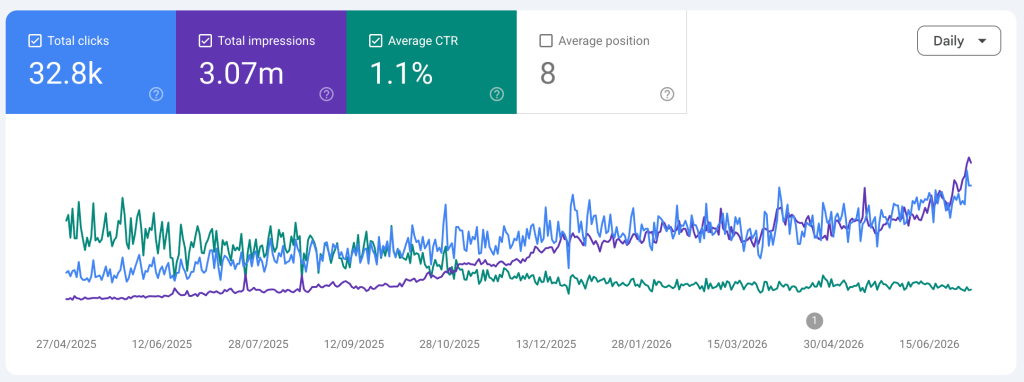
Conversion rate doubled, 1.8% to 3.4%, with zero organic equity lost
Ecommerce · Pet products United States

Conversion rate doubled, 1.8% to 3.4%, with zero organic equity lost

1.8% → 3.4% Site conversion rate
+7–9% Organic revenue, month over month
99.5% GA4 / Shopify data match
6%+ conversion rate — two to four times the pet-ecommerce average
Ecommerce · Pet products United Kingdom

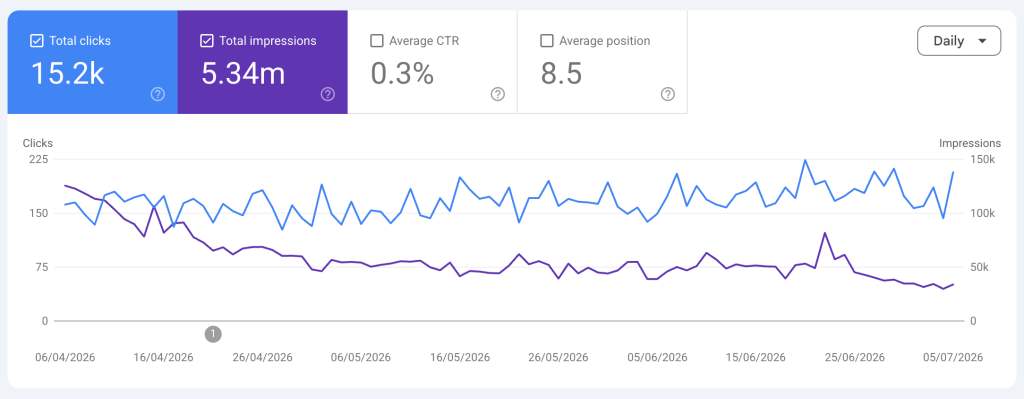
6%+ conversion rate — two to four times the pet-ecommerce average

6%+ Site conversion rate
2–4× Above industry average (1.5–2.5%)
Growing Organic revenue & AOV, month on month
#1 for every major category keyword — built from a blank slate
Ecommerce · Pet products New Zealand

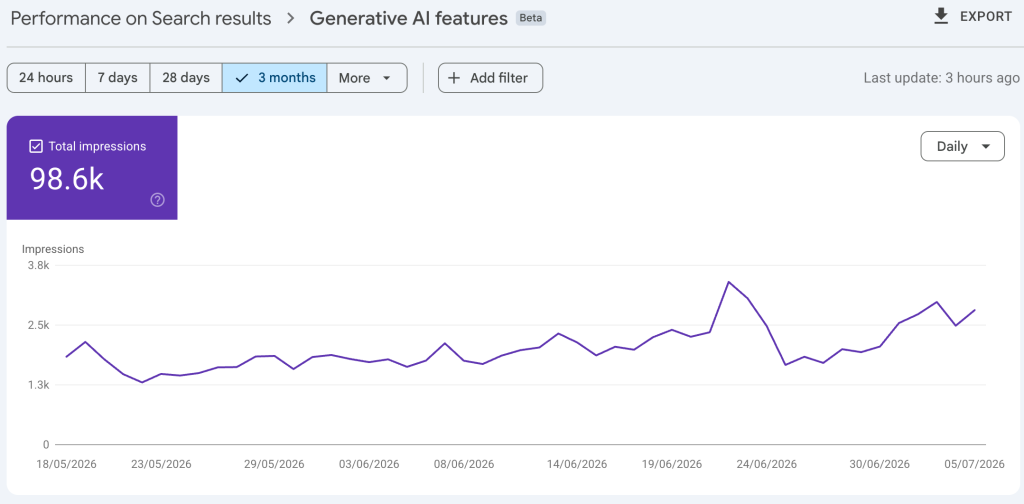
#1 for every major category keyword — built from a blank slate

#1 Every major NZ category keyword
0 → live Organic presence built from scratch
AU/NZ Hreflang split correctly configured
Common questions

Questions worth answering directly

Can you build bilingual English/Japanese websites?

Yes — English/Japanese bilingual website design is one of our core services in Japan. English and Japanese are built as two fully native experiences from the same codebase: the English version is written by English-language copywriters with conversion architecture built around international buyer expectations; the Japanese version is designed for Japanese reading patterns with appropriate typeface, vertical rhythm, and copy written in natural Japanese. Both versions share one CMS and one set of conversion goals. The result is a site that reads as if it was made for each audience — because it was. This is distinct from a translation service: we don't translate from one language into another, we design both versions independently within the same conversion framework.

Do you have English-speaking designers and project managers in Japan?

All project communication is available in English — briefing, design reviews, copy approvals, development updates, and final handoff. You will not need to translate briefs or approve work in a language you don't read. Our project management team operates in time zones with meaningful overlap with Tokyo (JST), and we schedule all key review calls at times that work for both Japan and your team's location. If you've worked with Japanese web agencies and spent significant time managing language barriers, this is the practical difference.

How long does a bilingual website build take?

A bilingual English/Japanese revenue website build takes 10–16 weeks from architecture review to launch. The additional time over a single-language build reflects the parallel design work — both layouts designed simultaneously rather than sequentially. An English-only website for a Japanese company is typically 8–12 weeks. Landing pages in both languages are 4–6 weeks.

What platforms do you build bilingual Japanese/English sites on?

WordPress with WPML (for Japanese businesses with frequent content updates and existing WordPress familiarity), Webflow with Weglot (for businesses that prefer a visual CMS), or headless Next.js (for enterprise-scale bilingual requirements or SaaS products). Japanese font performance is optimised regardless of platform.

What's the difference between a revenue website and a regular website?

A revenue website has a defined conversion goal for every page — an RFQ submission, a partnership enquiry, a demo request — and is built around converting a specific visitor type at a specific stage of their decision process. A regular website presents company information. For Japanese companies entering global markets, this distinction is commercially significant: an international buyer arrives at your English website with a specific question and a short attention span. A revenue website answers their question and gives them one action to take. A regular website describes your company's history and awards.

How do you measure whether the website is working?

GA4 is configured with language segmentation and conversion tracking before launch. Lead volume and conversion rate are tracked separately for Japanese and English visitors. Heatmaps run on both versions. Monthly reports — delivered in English — show conversion rate by language, by page, and by source. You can see at any point whether your English website is generating international leads and whether your Japanese website is generating domestic enquiries.

Do you work with manufacturing and industrial companies?

Manufacturing is one of our primary verticals in Japan. Japanese manufacturers with international ambitions need English websites that work for procurement managers, engineering directors, and sourcing teams — not translated corporate brochures. We've built English websites for manufacturers that generated meaningful international RFQ volume within the first year. The conversion architecture for a manufacturing site differs from a consulting or technology site — we understand the specific trust signals, capability presentation formats, and enquiry flow that international procurement buyers expect.

What's the difference between your English website service and just hiring a translator?

Translation converts your existing Japanese content into English text. A revenue website built for English-speaking international buyers is designed around what those buyers are looking for — which is often structurally different from what Japanese content prioritises. International B2B buyers want outcome statements, industry proof, capability specifics, and a direct way to enquire. They want this quickly — LCP under 2 seconds, single clear CTA, no navigation maze. Translation produces English text. We produce an English website that converts international visitors into leads.

Our team

The people behind the work

Not a black box. Real specialists you can call, with their names on the work.

Niraj Raut

Niraj Raut

Founder — Ecommerce SEO
Keshab Joshi

Keshab Joshi

PPC Expert
Hawrry Bhattarai

Hawrry Bhattarai

Google Ads Expert
Arogya Rijal

Arogya Rijal

SaaS SEO Expert
Start here

Get a bilingual revenue audit of your Japan website in 5 days

The web architecture review covers conversion logic in both languages, Core Web Vitals for Japanese and English pages, page architecture, and SEO structure — including Google Japan indexing and hreflang configuration. You receive a written report in English with every issue prioritised by revenue impact.

5-day turnaround · Revenue audit, not an aesthetics review · No retainer required